

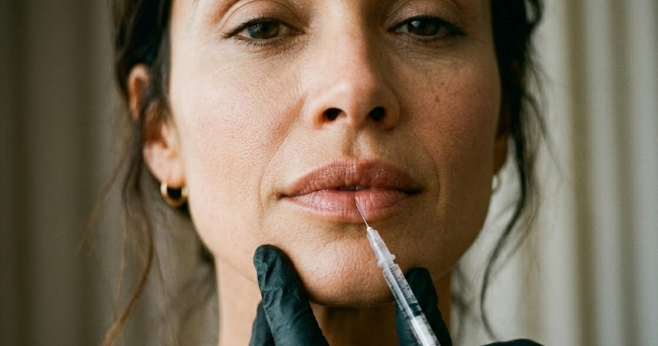
Lip fillers are one of the most requested treatments at medical aesthetic clinics in Montreal. They are also one of the most misunderstood. People often arrive with a reference photo and a general sense that the process involves a needle, without knowing much else. This guide covers what actually happens, from the consultation through the weeks that follow.
The consultation: where the plan gets made
The consultation is not a formality. It is the appointment where the physician assesses your lip anatomy, hears what you are hoping to change or enhance, and determines whether fillers make sense for you. Not every goal is achievable with filler. Some people have contraindications that need to be identified before anything is scheduled.
At La Clé, consultations are conducted by Dr. Hadi Krayem or a qualified member of the clinical team. The conversation covers what you want to improve, and the assessment covers proportion between upper and lower lip, symmetry, and the corners of the mouth. From there, a realistic plan takes shape.
There is no standard protocol. What works for one patient is not automatically right for another.
Lip mapping
Before the injection, the injector marks reference points on your lips. These guide where the hyaluronic acid is placed and in what quantity. The mapping step is what makes small-volume injections consistent rather than approximate.
The product: hyaluronic acid
Lip fillers in Montreal are hyaluronic acid based. Hyaluronic acid occurs naturally in the body, and the formulations used for lips are Health Canada approved. Products intended for the lips tend to be softer and more pliable than those used elsewhere, which matters for how natural the result feels and moves.
Hyaluronic acid filler is temporary. It breaks down over 6 to 12 months depending on your metabolism and the amount injected. If you do not like the result, it can be dissolved with hyaluronidase. That reversibility is one of the reasons it remains the standard.
The injection: what happens in the room
Numbing
A topical anesthetic cream is applied about 15 to 30 minutes before the injection. It reduces discomfort but does not eliminate it entirely. Many filler products also contain lidocaine, which adds a numbing effect as the treatment progresses. The upper lip is generally more sensitive than the lower. It is over quickly.
The injection itself
The procedure takes between 15 and 30 minutes. The injector uses either a fine needle or a cannula. Product is placed in small deposits along the vermilion border, the body of the lip, and the philtrum columns if needed. Your lips will swell during the procedure, sometimes more on one side. That is normal and does not reflect the final result.
The first days after treatment
Leaving the clinic with swollen, asymmetric lips is part of the process. Here is a rough timeline:
- Days 1 to 3: the most visible swelling. Bruising is possible. Results will look more dramatic than intended.
- Days 4 to 7: swelling starts to resolve. Symmetry improves and the shape becomes clearer.
- Week 2: most swelling is gone. The actual result is now visible.
Two weeks is the point at which it makes sense to assess whether you want any adjustments.
Aftercare
For the first 24 to 48 hours, avoid intense heat (sauna, hot bath), vigorous exercise, and pressure on the lips. Do not massage the area. Sleeping on your back the first night helps. Ice applied briefly and gently in the first few hours can reduce swelling.
How long lip fillers last
Most patients see results last between 6 and 12 months. Lips are a high movement area, so hyaluronic acid tends to break down more quickly there than in less mobile areas. A maintenance appointment keeps the result consistent over time.
How La Clé approaches lip filler
The clinic is at 204 Notre-Dame Street West, Suite 202, in Old Montreal. The approach here is not about maximizing volume. The goal is to improve what is already there, in proportion with the rest of the face. Results that look right because the proportions are respected.
Treatments are performed by Dr. Krayem or under direct physician supervision. To learn more, see our lip fillers treatment page.
Choosing a qualified injector in Montreal
In Quebec, hyaluronic acid injections must be performed by a licensed health professional: a physician, a nurse practitioner, or a nurse working within the regulated scope of practice. Before booking anywhere, check the credentials of the person who will treat you, ask which products are used, and confirm they are Health Canada approved. A credible clinic will not promise a guaranteed outcome.
What to expect at La Clé
The clinic is in Old Montreal, and the first step is always a consultation. Come with your questions. The consultation exists so that both you and the clinical team can make an informed decision before anything is scheduled. You can reach the clinic at 438 226-0160.
This article was reviewed by the La Clé clinical team.
To book a consultation, visit our contact page.
La Clé clinical team
Frequently asked questions
Do lip fillers hurt?
There is discomfort, but it is manageable for most people. A numbing cream is applied beforehand, and most filler products contain lidocaine. Most patients describe pressure and mild stinging rather than sharp pain.
How long does swelling last?
Swelling peaks in the first 48 to 72 hours and gradually resolves. By the two-week mark, most of the swelling is gone and the actual result is visible.
How long do lip fillers last in Montreal?
Between 6 and 12 months on average. Lips are a high movement area, so filler tends to break down faster there. Metabolism is also a factor.
Can lip fillers be reversed?
Yes. Hyaluronic acid filler can be dissolved with hyaluronidase, an enzyme that breaks down the product within hours. This is one of the main reasons it remains the standard for lips.
Who is qualified to inject in Quebec?
Injections must be performed by a licensed health professional: a physician, a nurse practitioner, or a nurse within the applicable framework. At La Clé, treatments are performed by Dr. Hadi Krayem or under direct physician supervision.